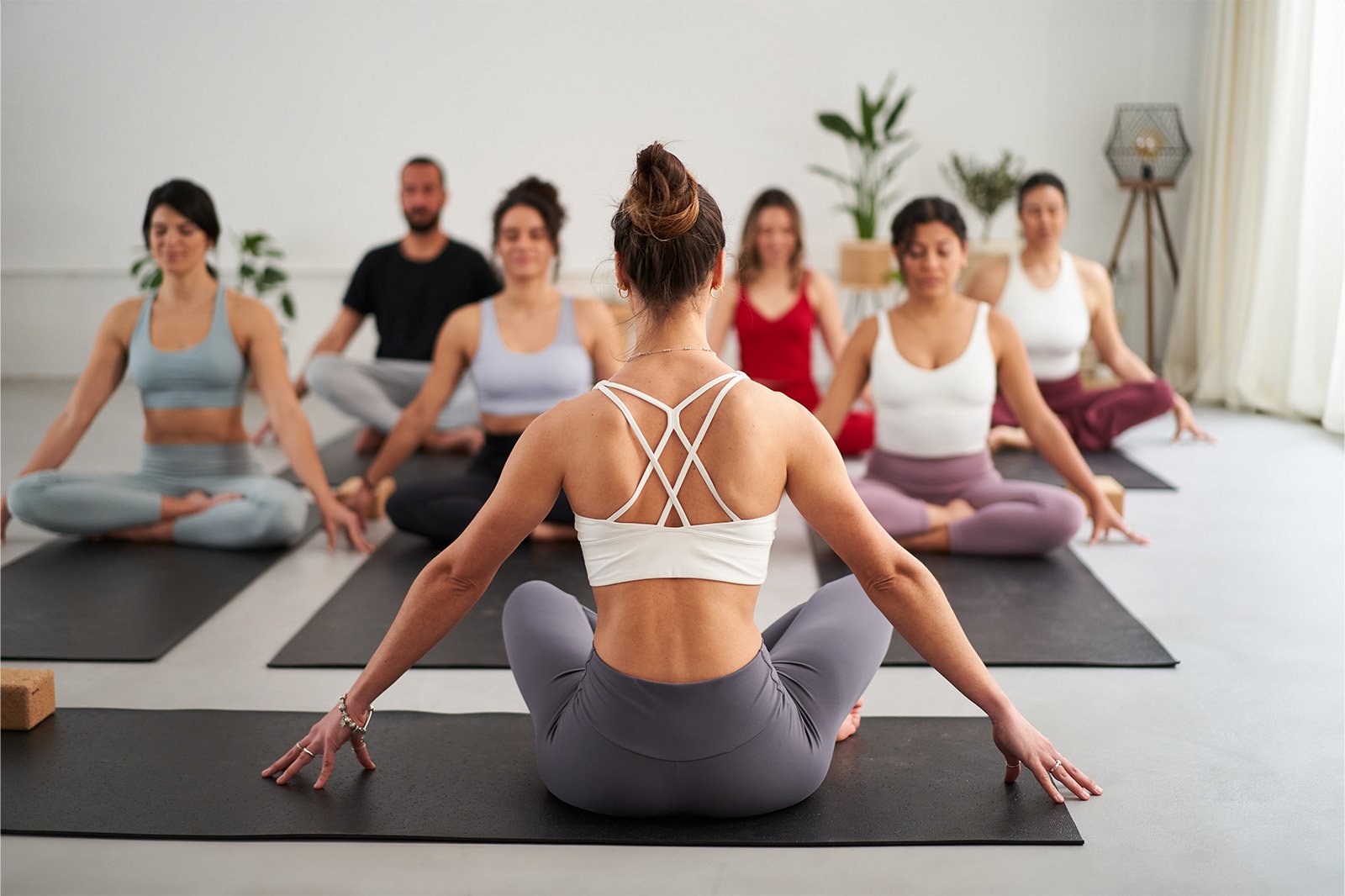
There are moments when you pause and realise your breath has been shallow for hours, barely moving beyond your chest. It often happens during long periods of focus, pressure, or constant decision-making. Over time, that pattern can keep your nervous system in a more alert state than it needs to be. Breathwork offers practical ways to interrupt that cycle. In this guide, we explore five ways breathing can support your system to settle, especially within practices like yoga for nervous system regulation, where breath becomes a steady point of focus.
Lowers Heart Rate
One of the most immediate effects of slower breathing is a reduction in heart rate. When you lengthen your exhale, your body begins to shift away from a stress response.
Practising yoga breathing exercises for anxiety often involves slowing the breath and creating a steady rhythm. This encourages the parasympathetic nervous system to activate, which helps the body move towards a calmer state. You might notice this as a gradual easing in your chest or a quieter pulse, especially after a few minutes of consistent breathing.
Improved HRV
Heart rate variability, or HRV, reflects how adaptable your nervous system is to change. Higher variability is generally linked to better recovery and resilience.
Breathing patterns that are slow and controlled can support this adaptability. In particular, yoga exercises that support the vagus nerve are often linked to improved HRV, as the vagus nerve plays a key role in regulating heart rate and internal balance. Over time, this can help your system respond more flexibly rather than staying locked in one state.
Reduced Blood Pressure
Breathwork has been shown to influence blood pressure by reducing overall physiological tension. Slower breathing reduces the intensity of the stress response and supports more efficient circulation.
Many of the benefits of pranayama breathing come from this steady, controlled pattern. Techniques that extend the exhale or balance inhale and exhale can help reduce strain on the cardiovascular system. This isn’t about forcing a result, but about allowing the body to settle through consistent, manageable pacing.
Clear Thinking
When breathing becomes shallow or irregular, attention often follows the same pattern.
Thoughts feel scattered, and it’s harder to stay with one task.
Simple yoga relaxation techniques that bring attention to the breath can help reduce that mental noise. As breathing steadies, focus often becomes clearer without needing to push for it. In more structured settings, including those offered at pranayama yoga retreat centres, this kind of practice is guided in a way that helps you notice how breath and attention are closely linked.
Reduced Stress Levels
Breathwork supports a shift in your baseline state, not just a temporary pause. With regular practice, your system can begin to spend less time in constant activation.
Approaches like restorative yoga for stress relief often combine slower breathing with supported positions, allowing both the body and mind to ease gradually. You might notice that reactions soften, and that it takes less effort to return to a steady state after a demanding situation.
Conclusion: Supporting Your Nervous System Through Breath and Practice
Breathwork doesn’t need to be complex to be effective. It’s something you can return to throughout the day, whether you’re between meetings or taking a quiet moment on your own. Over time, these small adjustments can support steadier energy and clearer focus.
At Healthy Living Yoga, breath-based practices are introduced through guided classes and structured sessions that allow you to move at a manageable pace. You’re given space to explore how breathing, movement, and rest work together, without needing to force a particular outcome.
If you’d like to experience this in a more supported setting, you’re welcome to explore options like a yoga retreat for nervous system regulation with Healthy Living Yoga and see what feels appropriate for you.